


NFT Utility Beyond Art: Unlocking Real-World Potential
In an age where $4.1 billion was lost to DeFi hacks in 2024, the need for reliable and innovative applications of blockchain technology has never been more pressing. While NFTs (Non-Fungible Tokens) initially captured the world’s attention through digital art and collectibles, their potential extends far beyond aesthetic appeal. “NFT utility beyond art” is a concept that has shifted focus, highlighting innovative applications across various sectors including gaming, real estate, finance, and ticketing.
This article aims to explore the diverse utilities of NFTs, focusing on their transformative impact on industries and their potential to redefine value in the digital landscape.
Understanding NFT Basics
NFTs are unique digital assets that represent ownership of a specific item or piece of content, secured on a blockchain. Each NFT is distinct from others and cannot be replaced or exchanged on a one-to-one basis. This feature makes them ideal for verifying digital ownership and providing proof of authenticity.
- Unique Identification: Unlike cryptocurrencies, NFTs are unique and can be used to represent physical or digital assets.
- Immutability: Once recorded on the blockchain, the information about the NFT cannot be modified.
- Programmability: Smart contracts allow for automatic execution of terms when certain conditions are met.
In a growing digital economy, leveraging these characteristics is critical for innovations that transcend art.
Applications Beyond Art
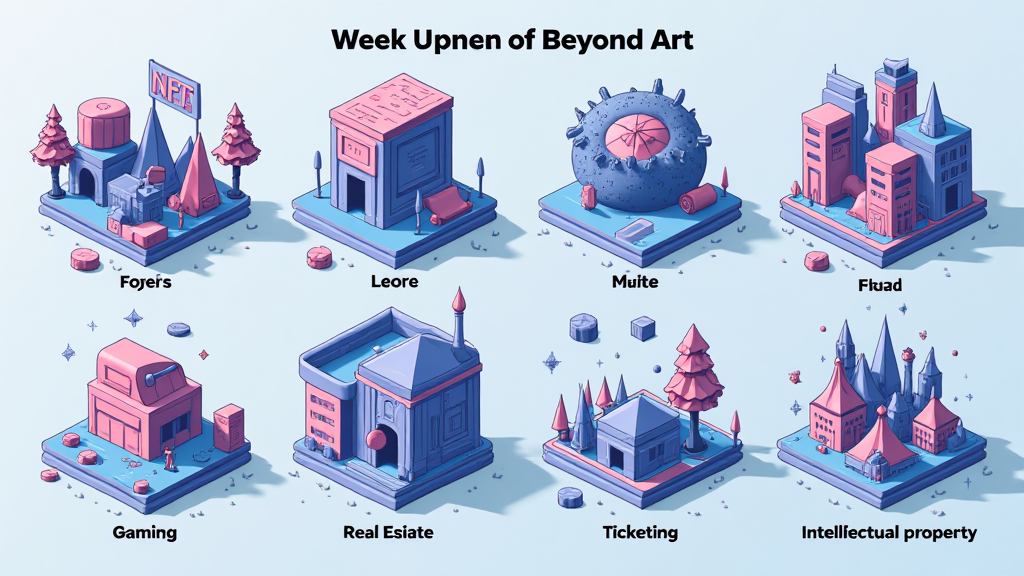
While digital art represents a significant portion of the NFT market, many real-world applications are emerging:
1. Gaming and Virtual Economies
In the gaming industry, NFTs serve as a new way to monetize in-game assets. Players can own, trade, or sell in-game items as NFTs, fostering a deeper connection to the games they play. For instance, in games like “Axie Infinity,” players earn tokens that can be exchanged for real currency.
- Players own their assets outright.
- Interoperability between games allows for asset usage across different platforms.
- NFTs can promote a sustainable game economy.
2. Real Estate and Property Management
Real estate has begun to integrate NFTs for fractional ownership, simplifying transactions and increasing liquidity in the property market. Each property can be tokenized and sold as NFTs, allowing multiple owners to hold stakes in a single asset. This model is particularly useful in markets with high entry costs.
- NFTs can streamline property transfers.
- Smart contracts can automate rental agreements.
- Fractional ownership lowers investment barriers.
3. Ticketing and Event Management
NFTs revolutionize the ticketing industry by preventing fraud and scalping. Each ticket is issued as an NFT, ensuring that the holder has genuine access to the event. Furthermore, NFTs allow for collectible aspects, enabling fans to trade or sell tickets after the event.
- Proof of authenticity reduces ticket fraud.
- NFTs can provide ongoing benefits, such as discounts for future events.
- Owners can hold NFTs as memorabilia.
4. Intellectual Property Rights
NFTs can facilitate licensing agreements for content creators, allowing them to retain ownership while offering usage rights to others. This application is particularly beneficial in the era of digital distribution, where unauthorized use of content is rampant.
- Content creators can track usage.
- Licensing can be automated via smart contracts.
- NFTs provide a transparent way to enforce rights.
Data-Driven Market Insights
The Vietnamese market is rapidly embracing blockchain innovations. According to a report by Statista, the country experienced a 300% growth in NFT usage between 2020 and 2023, showcasing a robust interest in digital ownership.
| Year | Market Growth | NFT Transactions |
|---|---|---|
| 2020 | — | 1,000 |
| 2021 | 50% | 1,500 |
| 2022 | 200% | 3,500 |
| 2023 | 300% | 7,000 |
This rapid growth is indicative of a shift in consumer behavior, with an increasing number of individuals recognizing the value of NFTs beyond simple collectability. Enterprises operating in Vietnam must adapt to these emerging trends.
Challenges Facing NFT Adoption
Despite the potential, challenges persist:
- Scalability: Many blockchains face issues with handling high volumes of transactions.
- Regulatory Concerns: Governments worldwide are still defining how to regulate NFTs.
- Environmental Impact: Concerns over the energy consumption of blockchain technologies.
Conclusion: Embracing the Future of NFTs
The expansion of NFT use cases beyond art positions them as a transformative tool across industries. Stakeholders must navigate challenges while focusing on the utility and innovative potential of NFTs in the digital landscape. Leveraging blockchain technology can provide enhanced security, transparency, and user experience in many sectors. As we look toward the future of NFTs in 2025 and beyond, staying informed and adaptable is key to harnessing their full potential.
Stay tuned for insights on 2025’s most promising altcoins and the exciting developments in smart contract audits as the NFT landscape continues to evolve. Not financial advice. Consult local regulators.
Author:
Dr. Jane Liu, a blockchain researcher with a Ph.D. in decentralized systems, has published over 20 papers on blockchain technology. She has led several compliance audits for high-profile projects, fueling her passion for advancing the utility of NFTs across industries.


